An ILBS initiative · Supported by NTPC CSR
Building a Healthier Generation, One Student at a Time
Y-SMilES is a nationwide public health education initiative by the Institute of Liver and Biliary Sciences, supported by NTPC, aiming to reach one lakh students with essential health knowledge and life skills.
Young – Stronger India through a Million Health Educated Students.
Health education that grows with every student
Y-SMilES is a school-based public health education programme designed to help children understand their bodies, build healthier habits, and make informed choices early in life.
Through age-appropriate learning, teacher engagement, screening, and community support, the programme brings practical knowledge about liver health, nutrition, hygiene, physical activity, and preventive care into everyday school life.
Led by ILBS and supported by NTPC CSR, Y-SMilES is building a stronger generation by making reliable health education accessible across communities throughout India.
Impact at a Glance
Real progress toward a healthier, stronger India.
Students Reached
48,322
Schools Enrolled
80+
States Covered
11+
Target by 2027
1 Lakh
An Initiative Of
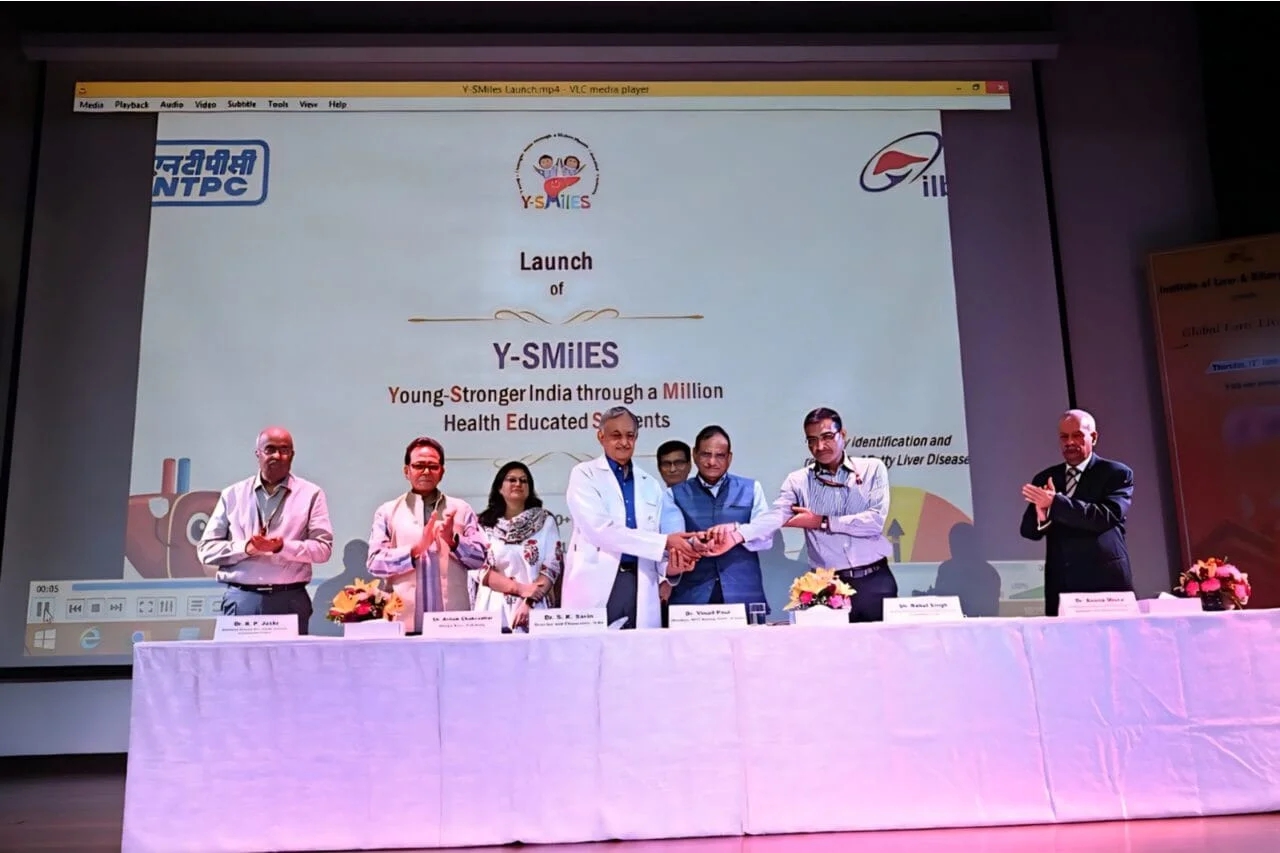
Moments of impact, captured with purpose.
School visits, workshops, and outreach moments that bring health education to life across India.
About Y-SMilES
Young – Stronger India through a Million Health Educated Students.
Y-SMilES is a flagship public health education programme led by the Institute of Liver and Biliary Sciences (ILBS), New Delhi, and supported by NTPC Limited under its Corporate Social Responsibility mandate.
The initiative equips school students with scientific, age-appropriate knowledge on liver health, lifestyle diseases, nutrition, hygiene, and preventive care—empowering the next generation to make informed health decisions.
Evidence-Based
Curriculum
Developed by leading hepatologists and public health experts at ILBS.
School-Centric
Delivery
Seamless integration into existing school systems with teacher training.
Preventive Focus
Health
Emphasis on early awareness to reduce future disease burden.
Scalable Model
Nationwide
Designed for rapid, high-quality expansion across India.
Why It Matters
India faces a rising burden of lifestyle and liver-related diseases. Early education is one of the most powerful preventive tools we have.
Rising Disease Burden
Non-communicable diseases and liver disorders are increasing among younger populations, driven by lifestyle and limited awareness.
Power of Early Education
Health literacy developed in school years creates lifelong habits and reduces future healthcare costs for families and the nation.
National Priority
Aligns with India’s commitment to preventive healthcare, school health programmes, and Sustainable Development Goals.
How Y-SMilES Works
A clear, structured pathway from school enrolment to measurable student impact.
- Step 1
School Registration
Principals express interest and complete a simple onboarding process with regional support.
- Step 2
Teacher Training
Educators receive structured training and classroom-ready modules tailored to age groups.
- Step 3
Classroom Delivery & Screening
Age-appropriate sessions on liver health, nutrition, hygiene, and lifestyle are conducted alongside early screening assessments.
- Step 4
Biochemical blood test and fibroscan
Advanced confirmatory tests are used to detect liver health risk early and guide intervention with greater precision.
Understanding Risk Zones
Y-SMilES helps schools and communities recognise and respond to different levels of health risk through education.
Low Risk
Low RiskStudents with healthy habits and good baseline awareness.
- Reinforce positive behaviours
- Continue regular health education
Moderate Risk
Moderate RiskEmerging lifestyle concerns or limited health knowledge.
- Targeted classroom modules
- Parent engagement sessions
High Risk
High RiskSignificant gaps in awareness or early signs of concern.
- Intensive education support
- Referral pathways if needed
Programme Objectives
Clear goals that guide every activity and partnership.
Health Literacy
Equip one lakh students with accurate, age-appropriate knowledge on liver health and preventive care.
Teacher Capacity
Train educators to confidently deliver and sustain health education within the school system.
Behaviour Change
Foster lifelong healthy habits related to nutrition, physical activity, and hygiene.
System Strengthening
Integrate preventive health education into the regular school framework at scale.
Evidence Generation
Build a robust monitoring system to measure knowledge gains and programme effectiveness.
Partnership Ecosystem
Create a collaborative network of schools, government, academia, and CSR partners.
Led by ILBS
The Institute of Liver and Biliary Sciences brings unmatched clinical and public-health expertise to this national initiative.
“Y-SMilES represents our deep commitment to moving beyond treatment into prevention. By reaching children early, we can change the trajectory of liver and lifestyle diseases for an entire generation.”
Nationwide Reach
From metropolitan schools to remote districts, Y-SMilES is building a uniform standard of health education.
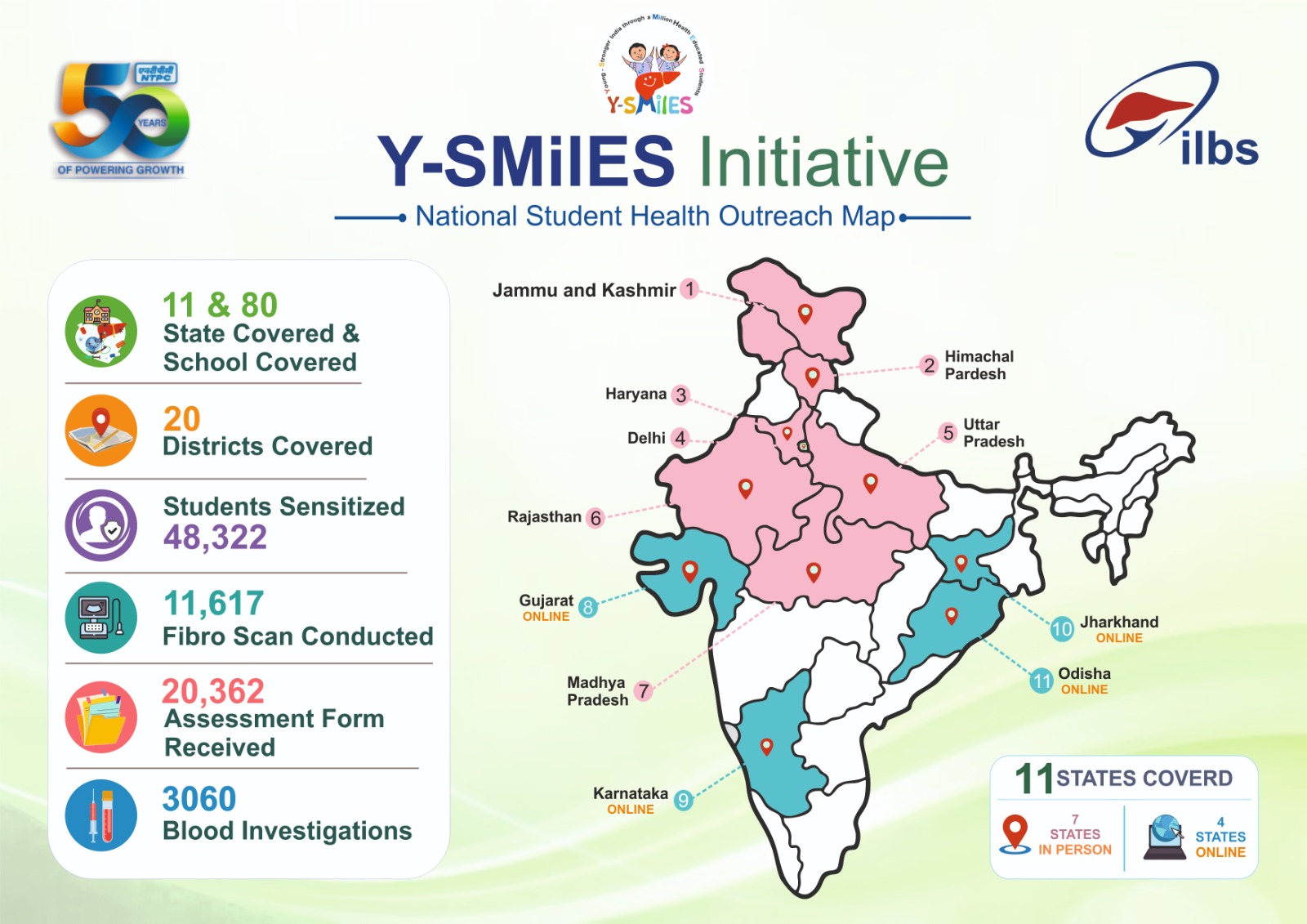
Geographic Coverage
20 States & UTs
Active implementation with a clear roadmap for pan-India expansion.
School Diversity
Government + Private
Inclusive model serving students across socio-economic backgrounds.
Long-term Vision
1 Lakh Students
Ambitious yet achievable target anchored in rigorous monitoring.
Our Partners
Y-SMilES is made possible through the commitment of institutions that share a vision for a healthier India.